
Choosing the right manufacturing process is one of the most critical decisions you will make during product development. It dictates your budget, your design limitations, and the final quality of your product. While injection molding and blow molding often get the spotlight, rotational molding (or rotomolding) frequently offers a superior alternative, especially for hollow, complex, or large-scale plastic parts.
So, why is rotational molding better than other processes? The answer lies in its unique combination of design freedom, economic tooling, and incredible durability.
Unlike high-pressure processes that force molten plastic into a mold, rotational molding uses high temperature and low pressure to slowly coat the inside of a hollow mold. This distinct approach unlocks benefits that other methods simply cannot match. From creating stress-free parts to offering affordable short manufacturing runs, here is why rotational molding stands out as the premier choice for your next project.
Vibrant and Customizable Colors
Visual appeal is often the first thing a customer notices. Rotational molding offers unparalleled advantages when it comes to color quality and customization.
Vibrant Color Availability
One of the standout features of this process is the ability to use pre-colored resins that result in deeply vibrant products. Because the color is blended directly into the plastic material before molding, the saturation is intense and consistent. You are not just painting a surface; you are creating a product that is vibrant through and through.
Uniform Color Throughout Wall Thickness
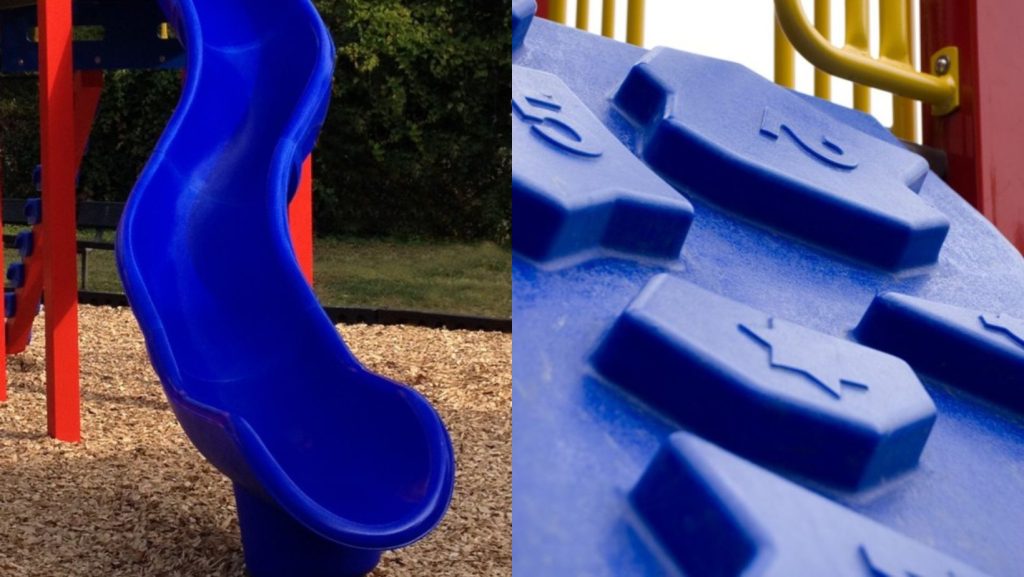
In many other manufacturing processes, color might be applied as a secondary finish or may not distribute evenly if the flow isn’t perfect. With rotational molding, the color is uniform throughout the entire wall thickness of the product. This means that if the product gets scratched or chipped during use, the color underneath is exactly the same as the surface. This durability of appearance is vital for products like playground slides, outdoor furniture, or industrial tanks that face rough handling.
UV Stabilization
Products made via rotational molding are often destined for the outdoors. The materials used in this process are typically U.V. stabilized. This means your product will not fade, crack, or discolor when exposed to the sun’s harsh rays. Whether you are manufacturing marine equipment or agricultural bins, this UV resistance ensures the product remains vibrant for years to come.
Ease of Color Changes
Manufacturing logistics can be a nightmare when you need to switch colors in injection molding. It often requires extensive purging of the machine, wasting material and time. Rotational molding makes this simple. If your project requires frequent color changes between production runs, this process is the best option.
Production Flexibility
In the manufacturing world, flexibility is synonymous with profitability. You need a process that adapts to your inventory needs, not one that forces you to overproduce just to pay off tooling costs.
Small to Large Production Runs
Rotational molding breaks the “high volume only” rule of plastics. You have the ability to produce small orders or massive bulk runs with equal ease. This makes it an ideal choice for a variety of projects, from one-off custom prototypes to full-scale market releases. You are not forced to order 10,000 units just to make the unit price viable, giving you incredible control over your inventory management.
Adjustable Wall Thickness
Imagine you have a mold for a storage tank, but you need two versions: a light-duty version and a heavy-duty version. In injection molding, you would likely need two different molds. In rotational molding, you can alter the wall thickness simply by adjusting the “shot weight” or part charge weight (the amount of plastic powder put into the mold). You can customize the product’s performance and weight without making any drastic design modifications or buying new tools.
Complexity and Design Versatility
Designers often feel restricted by the rules of manufacturing. Draft angles, parting lines, and flow restrictions can kill creativity. Rotational molding removes many of these barriers.
One-Piece, Seamless Shapes
The rotational molding process creates virtually stress-free parts. Because the plastic is not forced into the mold under high pressure, the finished product has no internal stresses that could lead to warping or cracking later. You can create complex, one-piece shapes with strong corners and walls that are completely seamless. This eliminates the weak points typically found where two parts are welded or glued together.
Uniform Wall Thickness
A common issue in blow molding is thinning at the extremities—corners and edges often end up thinner and weaker than the flat surfaces. Rotational molding solves this. The constant rotation ensures the plastic coats every part of the mold evenly, guaranteeing uniform wall thickness even in complex corners. This results in a stronger, more durable product.
Double Wall Construction Capabilities
Rotational molding gives you the flexibility to produce hollow double-wall parts. This is a game-changer for structural integrity. A double-wall construction adds stiffness and load-bearing properties without adding significant weight. Furthermore, the cavity between the walls can be filled with other materials, such as polyurethane foam, to provide superior insulation or additional rigidity.
Molded-In Graphics and Inserts
Branding and assembly are often secondary steps that add cost. With rotational molding, you can incorporate molded-in graphics and logos directly into the surface of the part. These graphics are permanent—they can’t be peeled off like a sticker.
Similarly, you can add metal inserts inside the cavity during rotation. If your part requires threads, bolts, or reinforcements, these can be baked right into the plastic. This allows you to get exactly the product you need with high functionality while keeping post-production assembly costs low.
Cost-Effective Tooling
Perhaps the most compelling argument for rotational molding is the bottom line. When compared to other plastic manufacturing methods, the barrier to entry is significantly lower.
Low Tooling Costs
If you have ever quoted a mold for injection molding, you know the sticker shock—steel molds can cost tens or hundreds of thousands of dollars. Rotational molding tools are typically cast from aluminum. They are lighter, simpler to make, and significantly less expensive. This lower initial investment reduces financial risk, making it easier to launch new products or test market demand.
Quick Tooling Fabrication
Time is money. Because the molds are simpler and often made from aluminum, companies like SPI can fabricate low-cost tooling quickly and efficiently. This allows you to get your product to market faster than competitors who are waiting months for steel molds to be cut.
Multi-Cavity Tooling for High Output
Just because the tooling is cheap doesn’t mean the output is slow. Multi-cavity tooling can be used to produce multiple parts in a single cycle. This allows for high-volume production runs when your product takes off, helping reduce costs and turnaround times while maintaining superior consistency.
Long Tooling Lifespan
Despite being lower cost, these tools are durable. Because the process is low-pressure, there is less wear and tear on the mold compared to high-pressure injection molding. Rotational molding tools have a long lifespan, which helps to reduce capital equipment costs in the long run.
Why Rotational Molding Wins
When you look at the full picture, rotational molding offers a balance that is hard to beat. It provides the design freedom to create seamless, complex shapes that are virtually stress-free. It offers aesthetic superiority with uniform, UV-stabilized colors and permanent graphics. And crucially, it makes financial sense through flexible production runs and low tooling costs.
While injection molding is great for tiny, high-volume parts, and blow molding works for simple bottles, rotational molding is the clear winner for anything that requires durability, size, complexity, and cost-efficiency.
Ready to see how this process can transform your next project? Contact SPI Plastics today to discuss your design requirements and discover the difference expert rotational molding can make.